

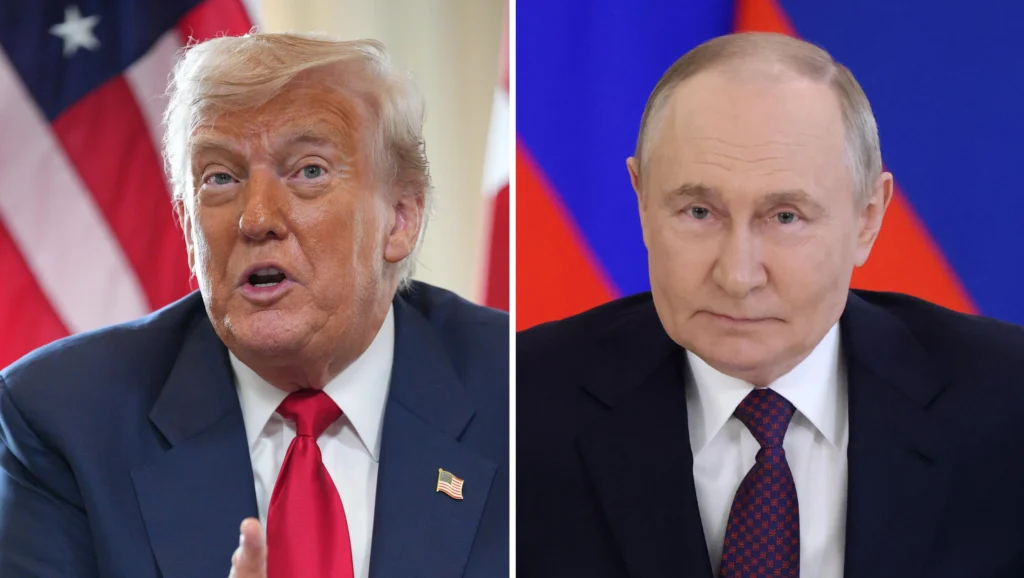
U.S. President Donald Trump will meet Russian President Vladimir Putin at Joint Base Elmendorf-Richardson in Anchorage, Alaska, for a critical summit aimed at addressing the ongoing Russia-Ukraine war. This historic meeting, the first face-to-face encounter between the two leaders since 2019, has sparked global interest and concern. With Trump pushing for a ceasefire and peace deal, the summit could shape the future of European security and the trajectory of the conflict that began in 2022. This article explores the details of the Trump-Putin meeting, its goals, and the potential implications for Ukraine and the world.
Table of Contents
Why Is Trump Meeting Putin?
The primary goal of the summit is to discuss a potential ceasefire in the Russia-Ukraine war, which has caused significant loss of life and widespread destruction since Russia’s invasion in 2022. President Trump has been vocal about his desire to broker a peace deal, emphasizing that ending the conflict is a priority. The meeting in Alaska is seen as a “listening exercise” to gauge Putin’s willingness to negotiate, with Trump warning of “very severe consequences” if Russia does not agree to halt the violence.
The choice of Alaska as the meeting location is symbolic. Once part of Russia until its sale to the U.S. in 1867, Alaska is geographically close to Russia, separated by just 55 miles at the Bering Strait. The summit will take place at a U.S. military base, highlighting American strength, as noted by Alaska Senator Dan Sullivan, who pointed to ongoing U.S. military exercises in the region as a show of power.
Key Details of the Trump-Putin Summit
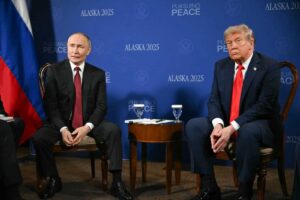
- Date and Time: The summit is scheduled for August 15, 2025, starting at 11:30 a.m. local time (3:30 p.m. ET). It will include a one-on-one meeting between Trump and Putin, followed by delegation talks and a joint press conference.
- Attendees: Trump will be accompanied by key administration officials, including Secretary of State Marco Rubio, Treasury Secretary Scott Bessent, Commerce Secretary Howard Lutnick, and CIA Director John Ratcliffe. Russia’s delegation includes Foreign Minister Sergey Lavrov and Defense Minister Andrey Belousov.
- Exclusion of Ukraine: Notably, Ukrainian President Volodymyr Zelenskyy was not invited to the summit, raising concerns among Ukraine and its European allies. Zelenskyy has warned that decisions made without Ukraine’s involvement may lack legitimacy.
- Agenda: Trump has emphasized that his goal is to secure a ceasefire without discussing territorial divisions. However, he has also suggested the possibility of “land swapping” between Russia and Ukraine, a proposal that Zelenskyy strongly opposes, citing Ukraine’s constitution.
What’s at Stake?
The Trump-Putin meeting carries significant implications for global geopolitics. The Russia-Ukraine war has destabilized Eastern Europe, disrupted global energy markets, and strained U.S.-Russia relations. A successful summit could pave the way for a ceasefire and future talks involving Ukraine, potentially reducing casualties and economic fallout. However, there are concerns that any deal could favor Russia, especially given Putin’s demands for territorial concessions and limits on Ukraine’s NATO ambitions.
European leaders and Zelenskyy fear that negotiations without Ukraine’s input could undermine the principle of “nothing about Ukraine without Ukraine.” Posts on X reflect this unease, with some users calling the summit a potential “disaster” for Ukraine, suggesting Trump’s admiration for Putin might lead to a deal that pressures Kyiv into unfavorable terms.
Public sentiment in the U.S. is mixed. A Pew Research Center survey conducted from August 4-10, 2025, found that 59% of Americans lack confidence in Trump’s ability to make wise decisions regarding Russia, with 33% believing he favors Russia too much. Only 40% express confidence in his decision-making on the conflict.
Challenges and Expectations
Trump has tempered expectations, describing the meeting as a preliminary step to understand Putin’s position. He has suggested a second meeting that would include Zelenskyy if the Alaska summit shows promise. However, recent Russian drone strikes on Ukrainian civilians, which killed seven and injured 17, indicate Putin may be escalating military actions to strengthen his negotiating position. Trump has criticized these attacks, stating they weaken Putin’s stance.
Putin, on the other hand, has praised Trump’s “sincere efforts” to end the war but is likely to push for concessions that align with Russia’s interests, such as retaining control over occupied Ukrainian territories like Crimea and parts of Donetsk and Luhansk. Analysts warn that Putin may offer a ceasefire that allows Russia to maintain escalatory control, potentially leading to future conflicts.
Global Reactions and Protests
The summit has sparked protests in Anchorage, with hundreds of Ukraine supporters rallying to voice their opposition. Signs reading “Alaska stands with Ukraine” and “No deal without Ukraine” reflect fears that the talks could sideline Kyiv. In Ukraine, frontline soldiers express skepticism, with one British volunteer noting a mood of “weary resignation” and doubting that peace can be achieved overnight.
European leaders, including French President Emmanuel Macron and UK Prime Minister Keir Starmer, have engaged with Zelenskyy to ensure Ukraine’s interests are represented. NATO’s Supreme Allied Commander, General Alexus Grynkewich, is in Alaska to provide military advice to Trump, signaling NATO’s commitment to supporting Ukraine.
Trump’s History with Putin
Trump and Putin have a complex history. During Trump’s first term, they met multiple times, including a controversial 2018 summit in Helsinki where Trump appeared to accept Putin’s denial of Russian interference in the 2016 U.S. election. Trump’s past praise for Putin has raised concerns about his approach, though he has recently criticized Putin’s actions in Ukraine, calling Russian attacks on civilians “disgusting.”
What Happens Next?
The outcome of the Trump-Putin summit remains uncertain. A successful meeting could lead to a second round of talks involving Zelenskyy, potentially in a neutral location like the UAE. However, failure to reach an agreement could escalate tensions, with Trump threatening new sanctions and tariffs on Russia.
For Ukraine, the stakes are existential. Zelenskyy has called for a “just peace” and emphasized the need for trilateral talks involving Ukraine, the U.S., and Russia. He remains hopeful that coordination with the U.S. and European allies can compel Russia to negotiate in good faith.
Conclusion
The Trump-Putin summit in Alaska is a pivotal moment in the Russia-Ukraine war. While Trump aims to broker peace, the exclusion of Ukraine and the complex dynamics between Trump and Putin raise concerns about the potential outcomes. As the world watches, the summit’s success will depend on whether both leaders can find common ground without compromising Ukraine’s sovereignty. Stay tuned for updates as this high-stakes diplomatic effort unfolds.